top of page
Coins&Their Histories
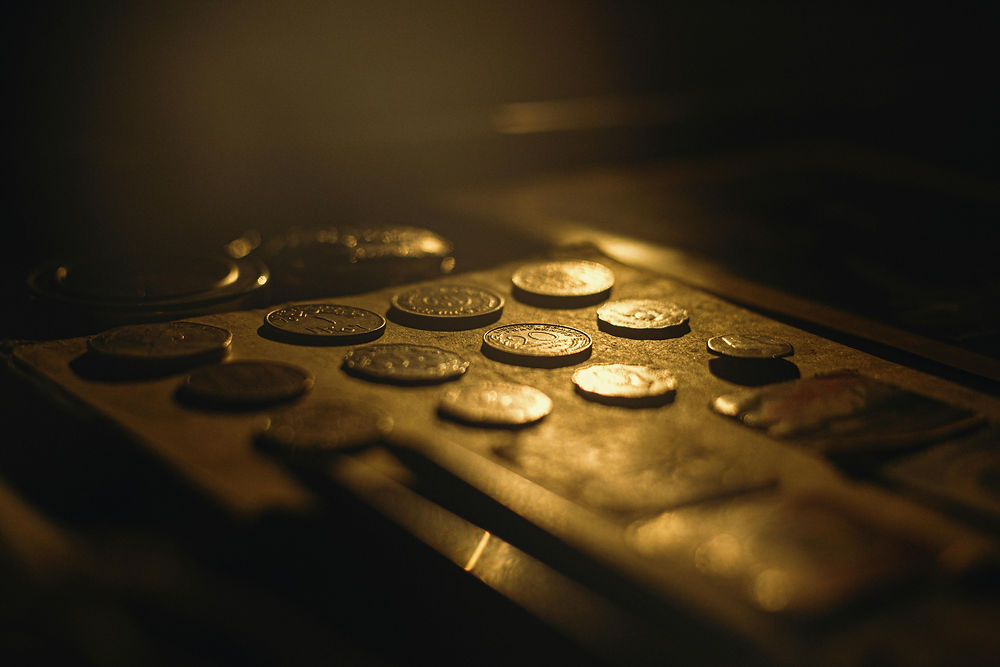
The Coins & Their Histories section offers in-depth, narrative-driven studies of ancient coins, exploring their origins, iconography, mints, and historical contexts. Each piece examines how individual coins reflect political power, cultural values, and economic conditions, treating them as primary sources that illuminate the societies that produced and used them.


The French Franc
The French Franc has a beautiful story, it became a national monetary symbol during periods of political upheaval, particularly after the French Revolution. As old regimes collapsed, the franc helped redefine France’s financial identity, replacing royal currencies tied to monarchy with a system aligned with republican ideals. This coin represents how money can become a political reset. Following the Revolution, France sought out to rebuild trust in institutions, including it

Raafey Qureshi
1 min read


The Chinese Cash Coin
The Chinese cash coin, which is recognizable by its round shape and square central hole, represents one of the longest continuously used coin types in human history. For over two thousand years, variations of this coin circulated across dynasties, shaping everyday economic life in China. Unlike high value gold or silver coins, cash coins were designed for volume. They facilitated small transactions, market purchases, wage payments, and daily trade among ordinary people. This
Raafey Qureshi
2 min read


The Islamic Gold Dinar
The Islamic gold dinar(one of my favs), first widely issued under the Umayyad Caliphate in the late seventh century, represents one of the most ideologically intentional currencies in history. Unlike earlier Byzantine and Persian coins that featured rulers and religious imagery, the dinar replaced portraits with Quranic inscriptions, emphasizing divine authority over imperial personality. This was not merely a theological choice.It was a smart economic strategy. By removing
Raafey Qureshi
2 min read


The British Gold Sovereign
The British gold sovereign emerged in its modern form in the nineteenth century, backed by the economic power of the British Empire and the stability of the gold standard. Struck in high purity gold and featuring the iconic Saint George and the Dragon design, it became one of the most trusted trade and reserve coins of the modern era. The sovereign circulated far beyond Britain. It moved through Europe, Africa, the Middle East, and Asia, widely accepted in international trade
Raafey Qureshi
2 min read


The Mughal Rupiya and the Monetization of a Subcontinental Economy
The Mughal rupiya, standardized under Sher Shah Suri in the sixteenth century and later refined by the Mughal emperors, became one of the most influential monetary units in South Asian history. It was not merely a coin but a system that reshaped taxation, trade, and daily commerce across the subcontinent. Before the rupiya’s widespread adoption, regional currencies varied widely in weight, purity, and design. The rupiya introduced consistency. Its standardized silver content
Raafey Qureshi
2 min read


The Roman Denarius and the Economics of Imperial Scale
Some coins do not just fund empires.They reveal how empires function. The Roman denarius began as a silver coin of remarkable consistency, introduced in the third century BCE to support Rome’s expanding military and commercial ambitions. Over time, it became the backbone of imperial finance, circulating across Europe, North Africa, and the Near East. At its height, the denarius functioned as a unifying monetary language across vast and culturally diverse territories. A mercha
Raafey Qureshi
2 min read


The Maria Theresa Thaler and the Longevity of Monetary Reputation
Most currencies fade when governments fall.This one survived for centuries. The Maria Theresa thaler, first minted in 1741 under the Habsburg Empire, became one of the most enduring trade coins in history. Even after the death of Empress Maria Theresa in 1780, the coin continued to be minted with the same frozen date, preserving its original design to maintain trust. Its longevity was not driven by imperial conquest.It was driven by reputation. The thaler circulated widely a
Raafey Qureshi
2 min read


The Spanish Silver Dollar and the First Global Currency
Long before modern globalization, one coin connected continents. The Spanish silver dollar, also known as the piece of eight, emerged from the vast silver mines of the Americas in the sixteenth century. Minted primarily from Potosí silver, it became the backbone of global trade, circulating across Europe, Africa, the Americas, and Asia. Unlike many earlier coins, its reach was truly planetary. Spanish dollars fueled transatlantic trade, paid European armies, financed colonial
Raafey Qureshi
2 min read


The Athenian Owl Tetradrachm and the Birth of Monetary Trust
Some coins do more than circulate.They teach the world what money can be. The Athenian owl tetradrachm was not the first coin ever minted, but it may have been the first to achieve true international monetary trust. Struck in silver and marked by the owl of Athena, it became one of the most widely accepted trade coins of the ancient Mediterranean. What made this coin extraordinary was not just its design, but its reliability. Athens maintained remarkably consistent silver pur
Raafey Qureshi
2 min read
bottom of page